By the KMW Podiatry team. Last reviewed November 2026.
An ingrown toenail happens when the edge of the nail presses into or pierces the skin beside it, most often on the big toe. It is a common reason people see a podiatrist, and it can affect children, teenagers and adults. This guide explains what you can safely try at home, when to get help, and the options a podiatrist may discuss.
What causes ingrown toenails?
Common contributing factors include:
- cutting nails too short or rounding the corners
- tight or narrow shoes, including school and work shoes
- naturally curved or wide nails, which can run in families
- injury to the toe, such as stubbing or being stepped on
- sweaty feet, which soften the skin around the nail
- picking or tearing the nail
Signs and symptoms
Early on, you may notice tenderness along one side of the nail, especially when wearing shoes. As it progresses, the skin may become red and swollen. If the skin is broken, infection can develop, with pus, increased pain or overgrown, raw tissue beside the nail.
What you can try at home
For mild ingrown nails with no signs of infection, these steps may help:
- Soak the foot in warm, salty water for 10 to 15 minutes once or twice a day, then dry well.
- Wear open-toed shoes or roomy shoes and avoid tight socks.
- Keep the area clean and covered with a simple dressing if the skin is tender.
- Let the nail grow so the corner sits past the end of the skin.
Please avoid “bathroom surgery”: digging out the corner with scissors or clippers often leaves a spike of nail that grows back further into the skin and can introduce infection.
When to see a podiatrist
Book an appointment if:
- pain is not improving after a few days of home care
- there is pus, spreading redness, swelling or a raw, overgrown area beside the nail
- the problem keeps coming back
- you have diabetes, poor circulation, reduced feeling in your feet or a condition that affects healing. In this case, see a podiatrist or GP early rather than trying home care (see our diabetic foot care page)
- a child or teenager has a painful ingrown nail
If you have a fever, red streaks up the foot or leg, or feel unwell, seek medical care promptly. Healthdirect also has general information on ingrown toenails.
What treatment options may a podiatrist discuss?
Your podiatrist will look at the nail and toe, ask about your health and discuss options suited to you. These may include:
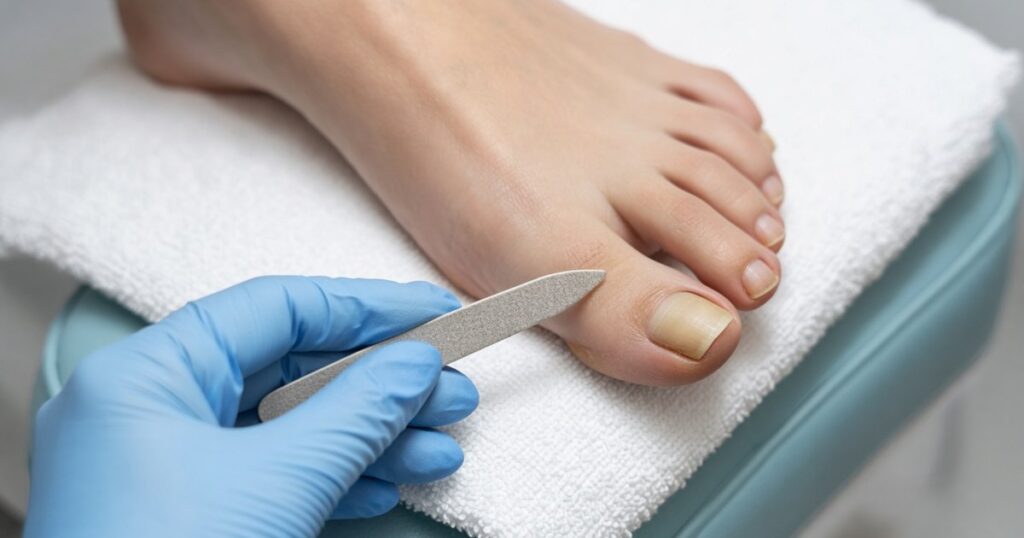
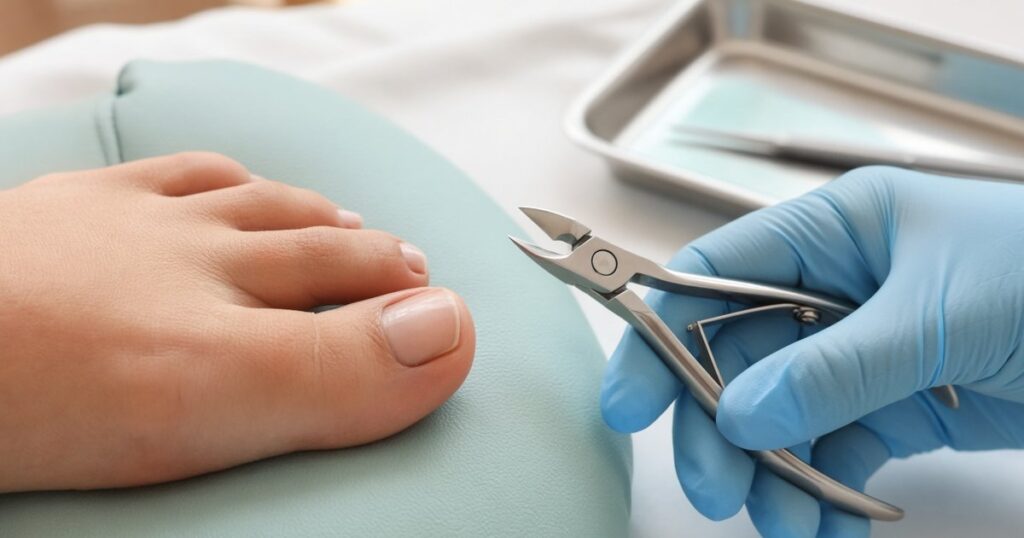
Conservative care. Carefully trimming and removing the offending edge of nail, and packing or protecting the nail edge. This is often done in a standard appointment and may relieve pressure for some people, although the nail can re-grow into the same position.
Partial nail avulsion (minor nail surgery). If the problem keeps recurring, your podiatrist may discuss removing a narrow strip of nail under local anaesthetic, usually with a chemical (phenol) applied to the nail root to reduce the chance of that edge growing back. This is a common procedure in podiatry clinics. Your podiatrist will explain the steps, the expected healing time, aftercare, risks such as infection or regrowth, and the alternatives, so you can decide whether it is right for you. As with any procedure, results cannot be guaranteed.
Antibiotics. If there is infection, your podiatrist may recommend you see your GP, as antibiotics are prescribed by a GP or other prescriber.
Ingrown toenails in children and teenagers
Ingrown toenails are common in active children and teenagers, often linked to growth spurts, sweaty sports shoes and nail-cutting habits. A podiatrist can treat the nail and show you and your child how to cut nails straight across. See our paediatric podiatry page.
Preventing ingrown toenails
- Cut nails straight across, not too short, and gently smooth sharp corners with a file.
- Choose shoes with enough room for your toes.
- Change socks daily and keep feet dry.
- Protect your toes during sport and work.
Fees and funding
Standard ingrown nail care can be done in a regular consultation. Nail surgery has a separate fee, which our team can confirm when you book. Private health extras may cover part of the cost depending on your policy. Eligible patients may also use a GP Chronic Condition Management Plan, DVA or NDIS funding.
Frequently asked questions
Can an ingrown toenail go away on its own?
A mild ingrown nail with no infection sometimes settles with careful home care and roomier shoes. If pain is not improving after a few days, or there are signs of infection, it is worth having it checked.
Is ingrown toenail surgery painful?
Partial nail avulsion is done under local anaesthetic, so the toe is numbed first. Some tenderness afterwards is common, and your podiatrist will explain aftercare and what to expect while it heals.
Will the nail grow back?
After conservative care, the nail edge can grow back into the same position. After a partial nail avulsion with phenol, regrowth of that edge is less likely but still possible.
Do I need a referral?
No referral is needed for a private appointment. You need a GP referral only if you want to use a GP Chronic Condition Management Plan or DVA funding.
Book an ingrown toenail appointment
No referral is needed for private appointments. Find a KMW clinic near you, book online or read more about ingrown toenail treatment in Adelaide.
This article is general information only and is not medical advice. Please speak with your podiatrist or GP about your own situation. KMW Podiatry’s podiatrists are registered with the Podiatry Board of Australia through Ahpra.