
By the KMW Podiatry team. Last reviewed November 2026.
Fungal toenail infection (onychomycosis) is common, and it can be stubborn. It often starts quietly, with a small white or yellow patch, and slowly spreads. Many people try a few products from the pharmacy before seeking help. This guide explains how fungal nails are usually confirmed, the main treatment options, what the evidence says about each and how long treatment usually takes.
Signs of a fungal toenail
A toenail with a fungal infection may:
- turn yellow, white, brown or cloudy
- become thick and hard to cut
- crumble or split at the edges
- lift away from the nail bed
- have debris building up underneath
- occasionally have a mild smell
Fungal nails often go hand in hand with athlete’s foot (tinea) on the skin. Treating the skin as well can help reduce the chance of the nail being reinfected. See our page on athlete’s foot.
Not every discoloured nail is fungal
Thick or discoloured nails can also be caused by repeated pressure from shoes, an old injury, psoriasis, bruising under the nail or other conditions. A dark streak or spot under the nail that is new or changing should always be checked by your GP. Because the treatments differ, it helps to know the cause first. See our pages on discoloured nails and thickened nails.
Testing: confirming the diagnosis
Your podiatrist or GP may suggest taking a small clipping or scraping of the nail to send to a pathology laboratory. Healthdirect notes that results can take five to six weeks. A positive result confirms a fungal infection and helps guide treatment. A negative result does not always rule it out, so your clinician will consider the whole picture.
Treatment options
There is no single treatment that works for everyone. The right approach depends on how much of the nail is affected, how many nails are involved, your health and medicines, and your preferences.
Oral antifungal medicine
Tablets prescribed by a GP are generally more effective than topical treatments for more extensive infections. According to healthdirect, a course usually runs for three to six months. Because these medicines can interact with other medicines and are not suitable for everyone, your GP will check whether they are right for you and may arrange blood tests.
Topical treatments
Antifungal nail lacquers and solutions are applied directly to the nail. Healthdirect notes that antifungal creams and ointments do not usually work well on toenail infections. They may be more useful for mild infections affecting only the end of the nail, and usually need to be applied consistently for many months.
Nail reduction by a podiatrist
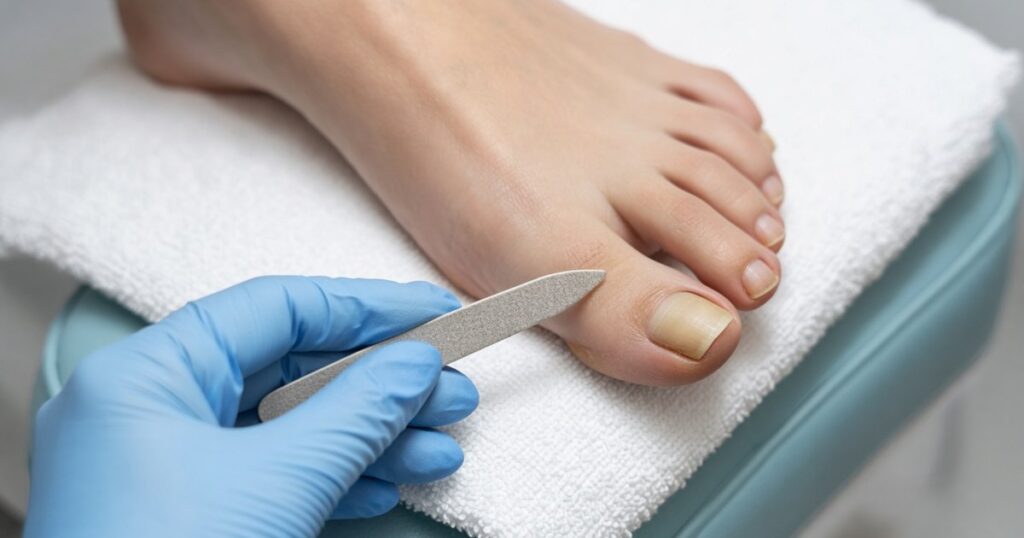
A podiatrist can thin and trim thick fungal nails. This does not cure the infection on its own, but it can make the nail more comfortable in shoes, reduce pressure, and may help topical treatments reach the nail better.
Laser and other device-based treatments
Laser treatment for fungal nails is offered by some clinics. The evidence for laser is still limited, and healthdirect describes laser therapy as even less effective than antifungal creams and ointments. If you are considering any device-based treatment, ask about the evidence, the likely number of sessions, the total cost and the alternatives before you decide.
How long does it take?
Toenails grow slowly, so even when treatment is working, it can take a year or more for a clear nail to grow out fully. The damaged part of the nail does not turn clear; it is gradually replaced by new nail from the base. It is common to see a clearer band of nail appearing near the cuticle before the rest improves.
Fungal nail infections can come back after treatment, so prevention habits matter.
Reducing the chance of reinfection
- Treat athlete’s foot early, including between the toes.
- Dry your feet well, especially between the toes.
- Wear thongs in shared showers, pool areas and change rooms.
- Change socks daily and rotate your shoes so they dry out.
- Do not share nail clippers or files.
- Keep nails trimmed straight across and not too short.
Who should see a health professional early?
Healthdirect advises that people with diabetes or a weakened immune system who get a fungal nail infection should also see a podiatrist, rather than relying on self-treatment. The same applies if the nail is painful, the skin around it is red or swollen, or you have poor circulation.
Frequently asked questions
Can fungal toenails go away on their own?
It is uncommon for a fungal nail infection to clear up without treatment. Some people with mild, painless changes choose to manage the nail with regular trimming rather than active treatment. Your podiatrist or GP can talk through the options.
Do pharmacy fungal nail paints work?
They may help some mild infections, especially near the tip of the nail, but they are generally less effective than oral medicine for more extensive infections and need consistent use for months.
Is laser treatment worth it for fungal nails?
The evidence is limited, and healthdirect describes it as less effective than other options. Ask about the evidence, costs and alternatives before deciding.
Why did my fungal nail come back?
Reinfection is common, often from untreated athlete’s foot, shoes or shared damp areas. Keeping the skin healthy and following prevention habits can lower the chance.
Get your nails checked
If you have thick, discoloured or painful toenails, a podiatrist can assess the nail, discuss testing and help you choose an approach. Learn more about fungal nail treatment at KMW Podiatry or book an appointment online. You can also call 1800 962 113.
This article is general information only and is not medical advice. Please see your GP or podiatrist about your own situation. KMW Podiatry’s podiatrists are registered with the Podiatry Board of Australia through Ahpra.