By the KMW Podiatry team. Last reviewed November 2026.
Hard skin on the feet is one of the most familiar foot complaints. Some people have a broad patch of thick skin under the ball of the foot; others have a small, sharp spot on a toe that hurts with every step. These are calluses and corns. They are related, but they are not quite the same. This guide explains the difference, why they form and what can help.
What is a callus?
A callus is a broad, flattened area of thickened skin. It forms where the skin is exposed to repeated pressure or friction, such as under the ball of the foot, on the heel or along the side of the big toe. Thickening is the skin’s way of protecting itself.
Calluses are often painless at first. They can become uncomfortable when they build up, become dry and cracked, or press on the area beneath.
What is a corn?
A corn is a smaller, more concentrated area of hard skin, often with a firm central core that presses inward. That core is why corns can feel like a stone in your shoe. Common types include:
- Hard corns, usually on the tops or tips of toes, or on the outside of the little toe, where shoes press.
- Soft corns, which form between the toes, where moisture keeps them rubbery and white.
- Seed corns, tiny corns that can appear on the sole, often in clusters.
Why do they form?
Healthdirect notes that corns and calluses are caused by pressure, from footwear or walking, or by differences in bone structure. Common contributing factors include:
- shoes that are too tight, too loose, too narrow or have a high heel
- toe shapes such as clawed or hammer toes, and bunions
- walking or standing a lot, especially on hard surfaces
- the way your foot moves and where weight is loaded
- thin or reduced fatty padding under the foot, which can happen with age
- not wearing socks, or seams rubbing inside shoes
Because pressure is the main cause, removing the hard skin helps for a while, but the corn or callus is likely to come back unless the pressure is also addressed.
Corn, callus or something else?
A plantar wart can look like a corn or callus, especially on the sole. Warts often have tiny black dots and are usually more painful when squeezed from side to side, while corns tend to hurt with direct pressure. A podiatrist can help tell them apart.
For more on how warts spread and the treatment options, read our plantar warts guide.
Safe home care
For mild hard skin, these steps may help:
- Moisturise daily with a foot cream, but not between the toes.
- After a bath or shower, gently use a pumice stone or foot file on calluses.
- Wear well-fitting shoes with room for your toes.
- Use padding or toe protectors to reduce rubbing on pressure areas.
- Keep the skin between your toes dry to help prevent soft corns.
Things to avoid:
- Do not cut corns or calluses with razors, blades or scissors.
- Avoid medicated corn pads and acid-based corn removers. Healthdirect advises avoiding over-the-counter corn cures, especially if you have diabetes, because the acid can damage healthy skin.
When to see a podiatrist
Book an appointment if:
- a corn or callus is painful or affects how you walk
- the skin is cracked, bleeding or has a dark spot underneath
- it keeps coming back despite home care
- you are not sure whether it is a corn, callus or wart
- you have diabetes, poor circulation, reduced feeling in your feet or a condition that affects healing
If you have diabetes, a callus can hide a breakdown in the skin underneath. It is safer to have hard skin managed by a podiatrist than to treat it yourself. See our diabetic foot care page.
What does a podiatrist do?
A podiatrist will look at the hard skin, your foot structure and your footwear to work out where the pressure is coming from. Treatment may include:
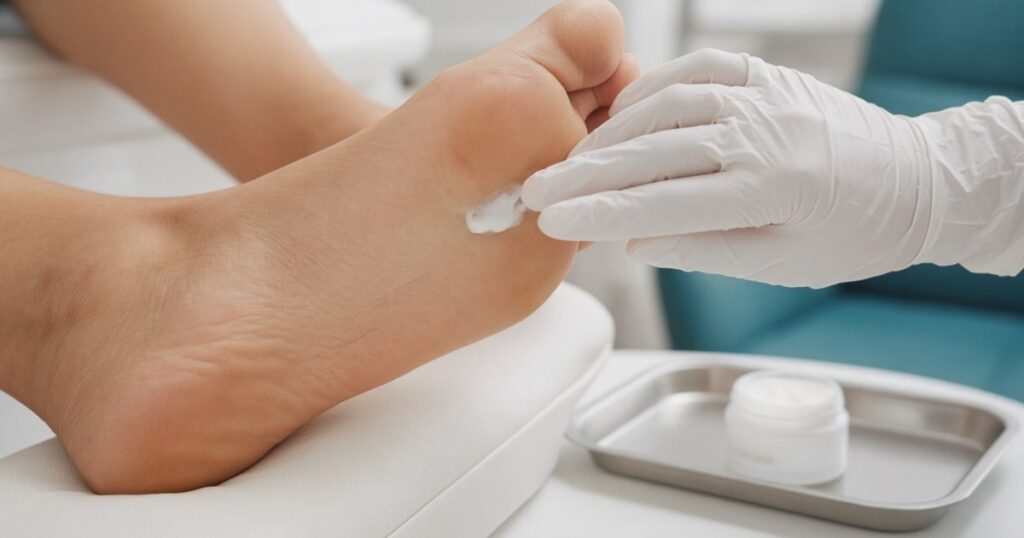
- Reducing the hard skin. Using a sterile blade, the podiatrist gently removes thickened skin and, for corns, the central core. Only dead skin is removed, so most people find this comfortable. See corn removal and callus reduction.
- Padding and offloading. Felt padding, silicone toe props or protective sleeves can take pressure off the area.
- Footwear advice. Small changes, such as a wider toe box or a lower heel, can make a big difference. Our shoe fitting advice page has more tips.
- Insoles or orthoses. For some people, redistributing pressure under the foot with an insole or orthosis may help.
How often you need treatment varies from person to person. Some people need occasional care; others with ongoing pressure or toe deformities benefit from regular reviews.
Frequently asked questions
Will a corn go away on its own?
If the pressure causing it is removed, a corn may gradually settle. If the pressure continues, it usually persists or returns.
Does corn removal hurt?
The podiatrist only removes dead, thickened skin, so most people find corn and callus removal comfortable. Tell your podiatrist if anything feels uncomfortable.
Why do my corns keep coming back?
Corns form because of pressure. Unless the cause, such as tight shoes or a toe shape, is addressed, they tend to return. Padding, footwear changes and regular care can help.
Are corn pads safe?
Medicated corn pads contain acid that can damage healthy skin. They are best avoided, especially if you have diabetes, poor circulation or thin skin.
Book a corns and callus appointment
KMW Podiatry provides corn and callus treatment at clinics across Adelaide and Gawler, and through home visits in some areas. Book online or call 1800 962 113.
This article is general information only and is not medical advice. Please see your GP or podiatrist about your own situation. KMW Podiatry’s podiatrists are registered with the Podiatry Board of Australia through Ahpra.