
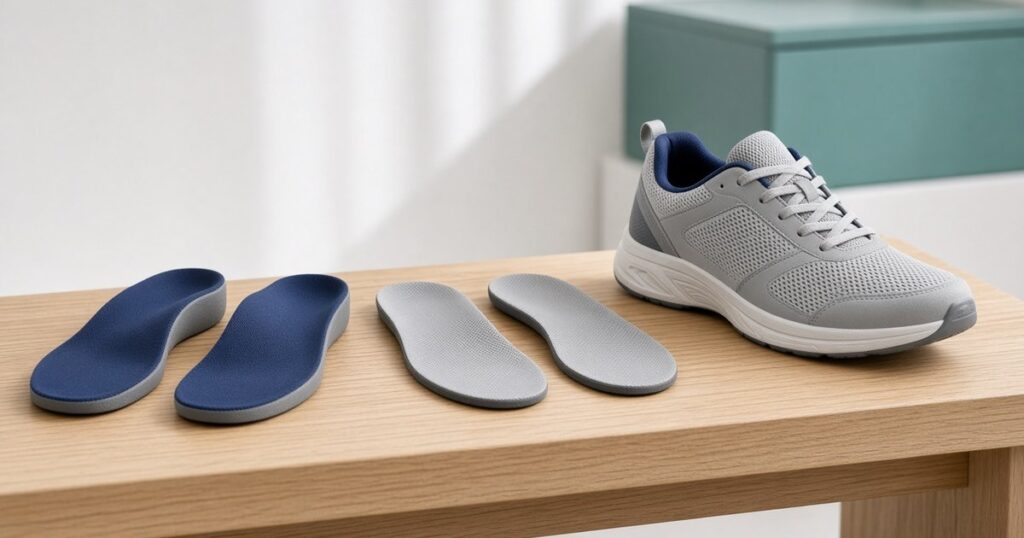
By the KMW Podiatry team. Last reviewed November 2026.
Walk into a pharmacy or sports store and you will find a wall of insoles promising comfort and support. Search online and you will also see custom orthotics made from a scan of your feet. So which do you need, and do you need anything at all? This guide explains the difference between off-the-shelf insoles, prefabricated orthoses and custom orthoses, and how a podiatrist decides what may suit you.
What are orthotics?
Orthotics, or orthoses, are devices worn inside shoes to change how forces act on the foot and lower limb. Depending on the design, they may support the arch, cushion a painful area, redistribute pressure, control motion or change the angle of the foot. They are commonly prescribed by podiatrists as a tool for some conditions, not a cure-all, and they are usually part of a wider plan that may include footwear changes, exercises and activity advice.
The three main options
1. Off-the-shelf insoles
These are mass-produced insoles sold in pharmacies, supermarkets and shoe shops. They range from soft cushioning inserts to firmer arch supports.
May suit: people looking for extra cushioning or mild arch support, and people with general tired or achy feet without a specific injury.
Limitations: they are made for an average foot, so the fit and support may not match your foot shape or your problem.
2. Prefabricated orthoses fitted by a podiatrist
Prefabricated orthoses come in standard designs, but they are usually firmer and more structured than general store insoles. A podiatrist can select the right size and type and modify them, for example by adding heel raises, wedges or padding to suit your feet. See our page on shoe inserts.
May suit: many common conditions, as a first step, or as a trial before considering custom devices.
Limitations: there is less scope to change the shape and they may not fit unusual foot shapes or specialised footwear.
3. Custom orthoses
Custom orthoses are made for your feet from a 3D scan, foam impression or cast, using a prescription written by your podiatrist after an assessment. Materials, thickness, shape and additions are chosen for your condition, your footwear and your activities.
May suit: people with specific foot shapes or conditions, those who have not found enough relief with prefabricated options, people needing devices for particular footwear, or those with high-pressure areas that need careful offloading.
Limitations: they take longer to make and generally cost more. They are not required for every person or every foot shape.
What does the evidence say?
Research suggests orthoses may help reduce pain for some conditions, such as some types of heel pain and forefoot pain, at least in the short to medium term. For several conditions, studies have found prefabricated orthoses can perform similarly to custom devices. Results vary between people, which is why an individual assessment matters more than a one-size-fits-all approach.
What happens at an orthotic assessment?
At an orthotics assessment, a podiatrist will usually:
- ask about your symptoms, activities, work and footwear
- examine your feet, ankles, knees and hips, including joint range and muscle strength
- watch you walk and, if relevant, run (see gait analysis)
- look at your current shoes and wear patterns
- discuss whether orthoses are likely to help, and what other options there are
If orthoses are recommended, your podiatrist should explain the purpose, the type (prefabricated or custom), the expected cost and the review plan before anything is made.
Wearing in your orthoses
New orthoses usually need a gradual wear-in period. A common approach is to start with an hour or two on the first day and increase over a week or two. Mild awareness of the device is normal at first, but new pain, blisters or rubbing should be reported to your podiatrist.
A review appointment allows your podiatrist to check fit and comfort and make adjustments if needed.
Footwear matters
Orthoses work best in supportive shoes with a firm heel counter, enough depth and a removable insole. Putting an orthosis into a soft, worn-out or very shallow shoe can limit its benefit. Bring the shoes you plan to wear to your fitting.
Questions to ask before you buy
- What is the orthosis meant to do for my problem?
- Would a prefabricated device be a reasonable first option?
- What other treatments, such as exercises or footwear changes, should go with it?
- What will it cost in total, including reviews?
- How long are the devices expected to last?
- What happens if they are uncomfortable?
Frequently asked questions
Do I need custom orthotics?
Not necessarily. Many people do well with footwear changes, exercises or prefabricated orthoses. Custom devices may be considered when there is a clear reason, after an assessment.
How long do custom orthotics last?
It depends on the materials, your activity level and changes in your feet. Your podiatrist can give you an estimate and check them at reviews.
Can I swap orthotics between shoes?
Often, yes, as long as the shoes have a similar shape and a removable insole. Some people need a different style for dress or work shoes.
Will private health insurance cover orthotics?
Some extras policies include a benefit for orthoses. Check your policy and ask your insurer about limits and waiting periods.
Book an orthotic assessment
KMW Podiatry offers orthotics assessment and fitting at clinics across Adelaide and Gawler. Book an appointment online or call 1800 962 113.
This article is general information only and is not medical advice. Please see your GP or podiatrist about your own situation. KMW Podiatry’s podiatrists are registered with the Podiatry Board of Australia through Ahpra.