By the KMW Podiatry team. Last reviewed November 2026.
Falls are common as we get older. According to healthdirect, one in four people aged 65 and over has at least one fall each year, and around half of falls happen at home. Falls have many causes, including medicines, eyesight, muscle strength and hazards at home. Feet and footwear are one part of the picture that is often overlooked. This guide explains how foot health can affect balance and simple steps that may help.
How feet affect balance
Your feet are your base of support. They also send constant information to your brain about the ground beneath you. When something affects the feet, it can affect how steady you are.
Foot pain
Painful corns, calluses, thick nails, bunions or arthritis can change the way you walk. People with foot pain may shorten their steps, shuffle or avoid putting weight through part of the foot, which can affect balance.
Reduced feeling
Conditions such as diabetes can cause peripheral neuropathy, reducing feeling in the feet. With less information coming from the soles, it can be harder to sense uneven ground or where your feet are.
Muscle weakness and stiffness
Weak ankle and toe muscles, and stiff ankle joints, can make it harder to recover your balance if you trip.
Swelling
Swollen feet and ankles can make shoes tight and uncomfortable, and lead people to wear loose slippers instead.
Footwear: what to look for
Healthdirect lists poorly fitting shoes and slippers as a falls hazard. When choosing everyday shoes, look for:
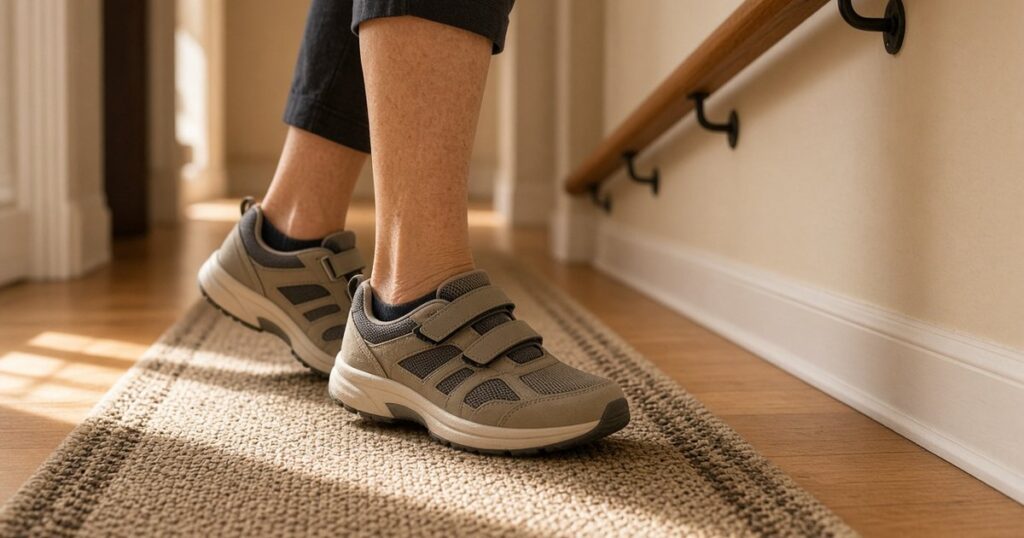
- A secure fastening. Laces, velcro or buckles hold the shoe on your foot. Slip-ons and backless slippers can come off or catch.
- A firm heel counter. The back of the shoe should hold your heel steady.
- A low, broad heel. A heel that is low and wide gives a more stable base.
- A thin, firm sole with good grip. Very thick, soft soles can reduce your sense of the ground. Look for a slip-resistant tread.
- The right size and shape. Enough room for your toes, without the foot sliding around.
- Easy to put on. If bending is hard, look at velcro straps, elastic laces or a long-handled shoehorn.
For more tips, see our shoe fitting advice.
The slipper problem
Many falls happen at home, where people often wear old, stretched or backless slippers, or walk in socks on smooth floors. Consider replacing worn slippers with an enclosed slipper or indoor shoe that has a back, a fastening and a non-slip sole.
Simple steps you can take
- Check your feet daily, or ask someone to help if you cannot see or reach them.
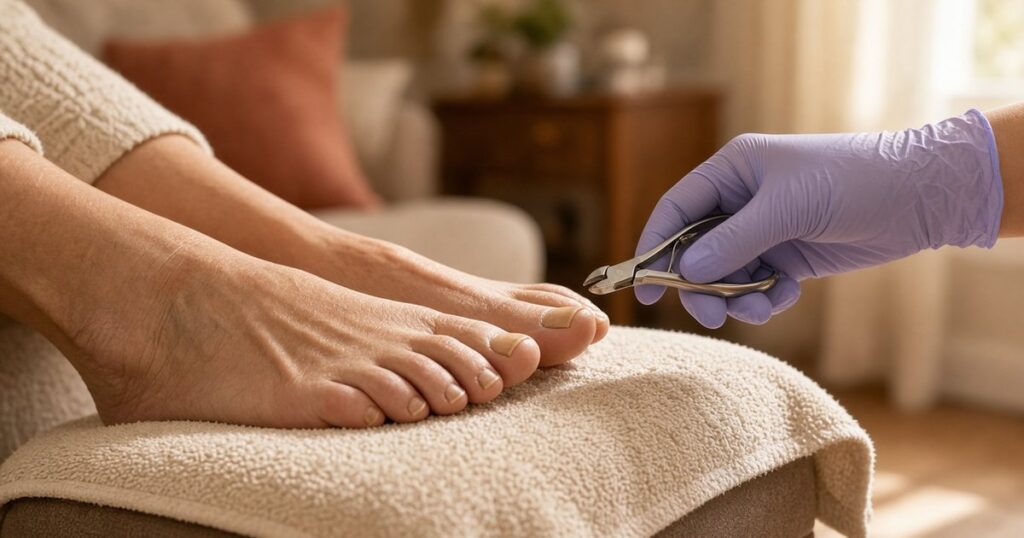
- Keep toenails trimmed and have corns and calluses looked after.
- Replace shoes and slippers when they are stretched, worn or slippery.
- Keep active. Walking and exercises that build strength and balance can help.
- Remove trip hazards at home and make sure areas are well lit at night.
- Have your eyesight checked and ask your GP or pharmacist to review your medicines.
How a podiatrist can help
A podiatrist can look at the foot-related factors that may contribute to falls risk. An appointment may include:
- checking for painful skin and nail problems and treating them
- testing sensation and circulation in the feet
- assessing foot and ankle strength, joint movement and balance
- watching how you walk
- checking your shoes and slippers and suggesting changes
- recommending exercises, insoles or orthoses where appropriate
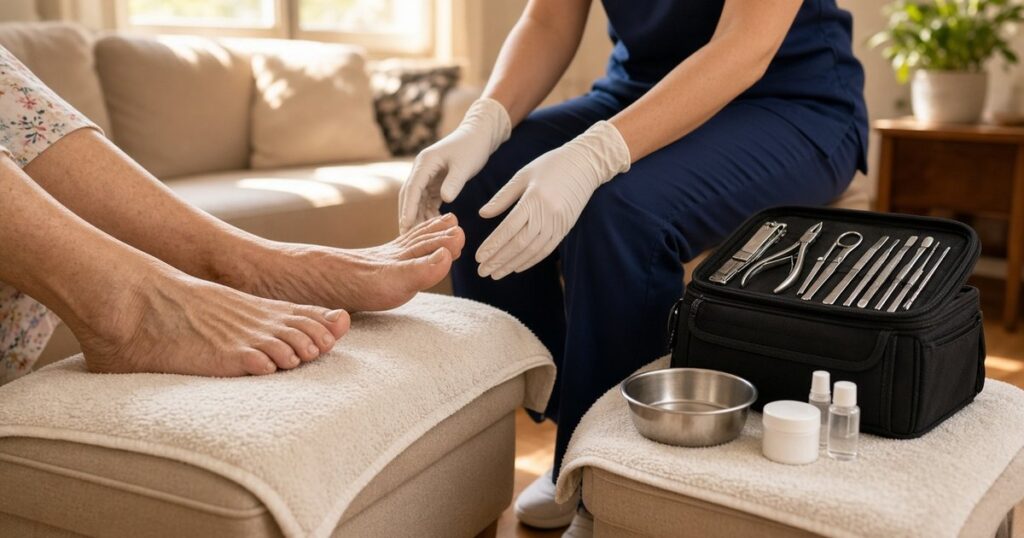
KMW Podiatry offers balance and gait training and footwear advice, and can liaise with your GP or other health professionals. For people who find travel difficult, home visits can be arranged in many parts of Adelaide, which also allows the podiatrist to see the footwear and environment you use every day.
After a fall
If you have had a fall, healthdirect recommends seeing your doctor, even if you were not hurt. Your GP can look at possible causes and may refer you to other health professionals, such as a podiatrist or physiotherapist. If you are seriously hurt, or cannot get up, call triple zero (000).
Frequently asked questions
What kind of shoes are safer for older people?
There is no single shoe that suits everyone, but shoes with a secure fastening, a firm heel counter, a low broad heel and a thin, firm, slip-resistant sole are generally a sensible choice.
Are slippers dangerous?
Backless, stretched or slippery slippers can increase the risk of tripping. Enclosed slippers with a back, a fastening and a non-slip sole are a better option.
Can foot exercises help with balance?
Exercises that strengthen the feet, ankles and legs, and challenge balance, may help. A podiatrist or physiotherapist can suggest exercises suited to you.
Can funding help pay for podiatry?
Depending on your situation, Support at Home, DVA, a GP Chronic Condition Management Plan, the NDIS or private health extras may help. Our team can help you understand the options.
Book a foot and footwear check
Book an appointment online at one of our clinics across Adelaide and Gawler, or call 1800 962 113 to ask about a home visit.
This article is general information only and is not medical advice. Please see your GP or podiatrist about your own situation. KMW Podiatry’s podiatrists are registered with the Podiatry Board of Australia through Ahpra.