By the KMW Podiatry team. Last reviewed November 2026.
Cutting your own toenails can become harder with age. Nails may get thicker and tougher, while bending down, eyesight and hand strength may not be what they were. For carers and family members, it can be hard to know what is safe to do at home. This guide explains why toenails thicken, how to care for them safely and when a podiatrist can help.
Why do toenails get thicker with age?
Several factors can contribute, often together:
- Slower nail growth. As nails grow more slowly, the nail plate can build up and thicken.
- Repeated pressure or injury. Years of tight shoes, stubbing or dropping things on the toes can damage the nail root, causing thicker regrowth.
- Fungal infection. A fungal infection can make nails thick, discoloured and crumbly.
- Reduced circulation. Changes in blood flow can affect nail growth.
- Skin and medical conditions. Psoriasis, diabetes and some other conditions can affect the nails.
- Foot shape. Bunions and clawed toes can change how the nail is loaded in shoes.
In some people, a nail becomes very thick and curved, like a ram’s horn. This is called onychogryphosis (gryphotic nails). See our page on gryphotic nails.
Healthdirect notes that toenails can become thicker with age, making them harder to cut and increasing the risk of ingrown nails and infections.
Why thick nails matter
Thick nails are not just a cosmetic issue. They can:
- press on the nail bed and cause pain in shoes
- make it hard to find comfortable footwear
- lead to bruising or bleeding under the nail
- increase the risk of ingrown nails or infection
- contribute to discomfort when walking, which can affect activity and balance
Safe nail care at home
If you or a family member are still able to care for the nails safely, these tips can help:
- Soften first. Trim after a bath or shower, when nails are softer.
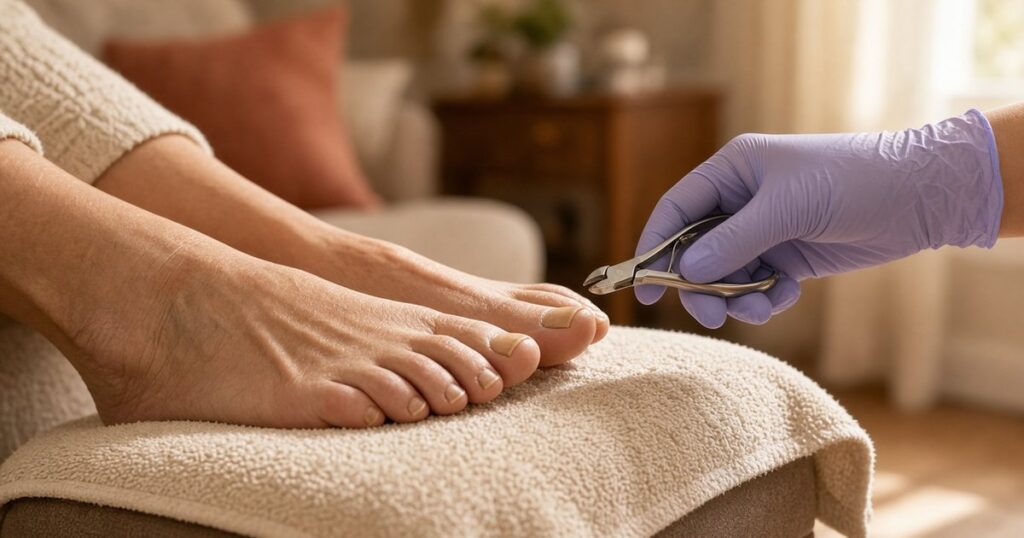
- Use the right tools. Larger nail nippers with a straight edge are easier to use on thick nails than small clippers.
- Cut straight across. Avoid cutting down the sides or too short. Smooth sharp edges with a file.
- File regularly. Gently filing the top of a thick nail with a coarse emery board can help keep the thickness down between trims.
- Good light and a stable seat. Sit in a well-lit spot with your foot supported.
- Look at the skin. Check for redness, breaks or swelling around the nails.
Stop and seek help if: you cannot see the nail clearly, you cannot reach your feet comfortably, the nail is too thick to cut, or you have diabetes, poor circulation, reduced feeling in your feet or take blood-thinning medicines. In these situations, a small cut can be slow to heal.
What a podiatrist can do
A podiatrist can trim nails safely and reduce the thickness of thickened nails with specialised instruments and a nail drill. Most people find this comfortable; tell your podiatrist if anything hurts. During the appointment, they will also:
- check the skin, circulation and sensation in your feet
- look for corns, calluses or areas of pressure
- check for signs of infection or ingrown nails
- discuss footwear and whether shoes are pressing on the toes
- suggest a review interval that suits your needs
If a fungal infection or another condition is suspected, your podiatrist can discuss testing and options with you and your GP.
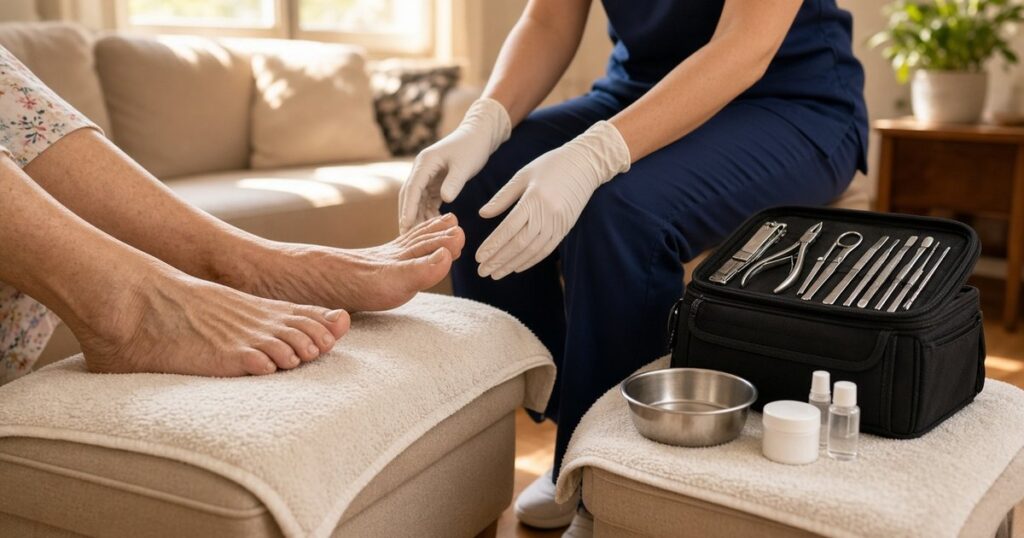
Home visits for people who find travel hard
For people who find it difficult to get to a clinic, KMW Podiatry offers home visit podiatry in many parts of Adelaide, subject to availability. Visits can be arranged privately or through funding such as Support at Home, DVA or a GP Chronic Condition Management Plan, where eligible. KMW also visits residential aged care homes.
Tips for carers and family
- Look at your family member’s feet regularly, especially if they cannot see or reach them.
- Notice changes in walking, such as shuffling or avoiding shoes, which may signal foot pain.
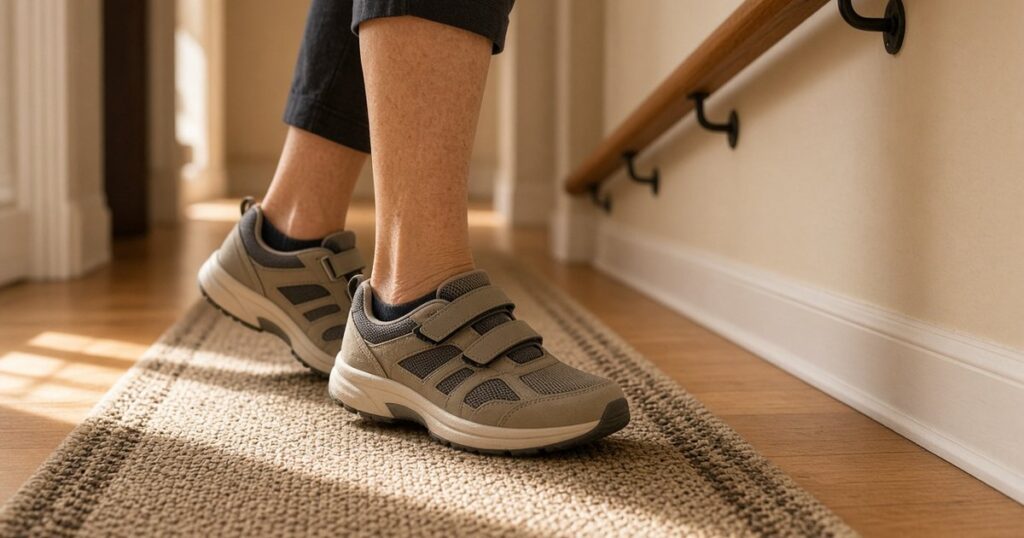
- Check shoes and slippers for fit and wear.
- Keep a list of medicines and health conditions for the podiatrist.
- If you are unsure, ask for a professional nail check rather than risk a cut.
Frequently asked questions
Is it safe to cut my elderly parent’s toenails?
Often, yes, if the nails are not very thick and your parent does not have diabetes, poor circulation or reduced feeling. If you are unsure, or the nails are thick or curved, it is safer to ask a podiatrist.
Does nail reduction hurt?
Thinning a thick nail with a nail drill only removes the dead nail plate, so most people find it comfortable. Tell your podiatrist if anything feels uncomfortable.
How often should thick toenails be trimmed?
It varies. Your podiatrist will suggest a review interval based on how fast your nails grow and your general foot health.
Can thick toenails be made normal again?
Thickened nails often stay thicker, especially if the nail root has been damaged, but regular reduction can keep them comfortable. If a fungal infection is involved, treatment may improve new growth.
Book a nail care appointment
KMW Podiatry offers nail care at clinics across Adelaide and Gawler and through home visits. Book an appointment online or call 1800 962 113.
This article is general information only and is not medical advice. Please see your GP or podiatrist about your own situation. KMW Podiatry’s podiatrists are registered with the Podiatry Board of Australia through Ahpra.