Footwear and orthotics advice in Adelaide

Choosing shoes or orthotics can be confusing when your feet hurt. KMW Podiatry provides patient education about footwear fit, activity needs and the role of orthoses after assessment. Advice should help you understand your options, expected benefits, limitations and costs before deciding what is right for you.

Choosing footwear for your feet and activities

Bring the shoes you wear most often, including work or sports shoes, and any existing orthotics. Your podiatrist can consider fit, pressure points, wear patterns and how the shoes suit your activities and foot shape.

Look for adequate length, width and depth, with room for your toes and a secure fit. A higher price or a particular brand does not establish that a shoe suits your needs. If you have diabetes, reduced sensation or circulation problems, seek individual advice about footwear and skin protection.

Read more about orthotics assessment and treatment options.

Orthotics Treatment Adelaide

Why Choose Us for Your Care?

KMW Podiatry provides podiatry care across metropolitan Adelaide and Gawler, with treatment planned around each patient’s needs.

Health Scheme Support

We see patients under WorkCover, GP care plans, NDIS, DVA, Support at Home and other funding arrangements, so cost and eligibility are clear from the start.

AHPRA-Registered Podiatrists

Your care is provided by podiatrists registered with the Australian Health Practitioner Regulation Agency.

Convenient Locations

Clinics across metropolitan Adelaide and Gawler, located inside GP practices, medical centres and stand-alone sites.

Home Visits Available

Where travelling to a clinic is difficult, eligible patients across Adelaide can receive podiatry care at home.

Understanding orthotics and follow-up

Orthoses are inserts worn inside shoes. They may be considered for some painful conditions, alongside footwear changes, exercise or other care. Options can include ready-made or custom devices, depending on the assessment. Orthoses are not necessary for everyone, and a low arch without pain or functional difficulty does not automatically need treatment.

If orthoses are recommended, discuss which shoes they will fit, how to start wearing them, expected costs and how progress will be reviewed. Seek advice if they cause persistent discomfort, rubbing or skin changes; do not keep wearing a device that causes a wound.

Further information: Healthdirect: foot care and flat feet.

Orthoses during assessment

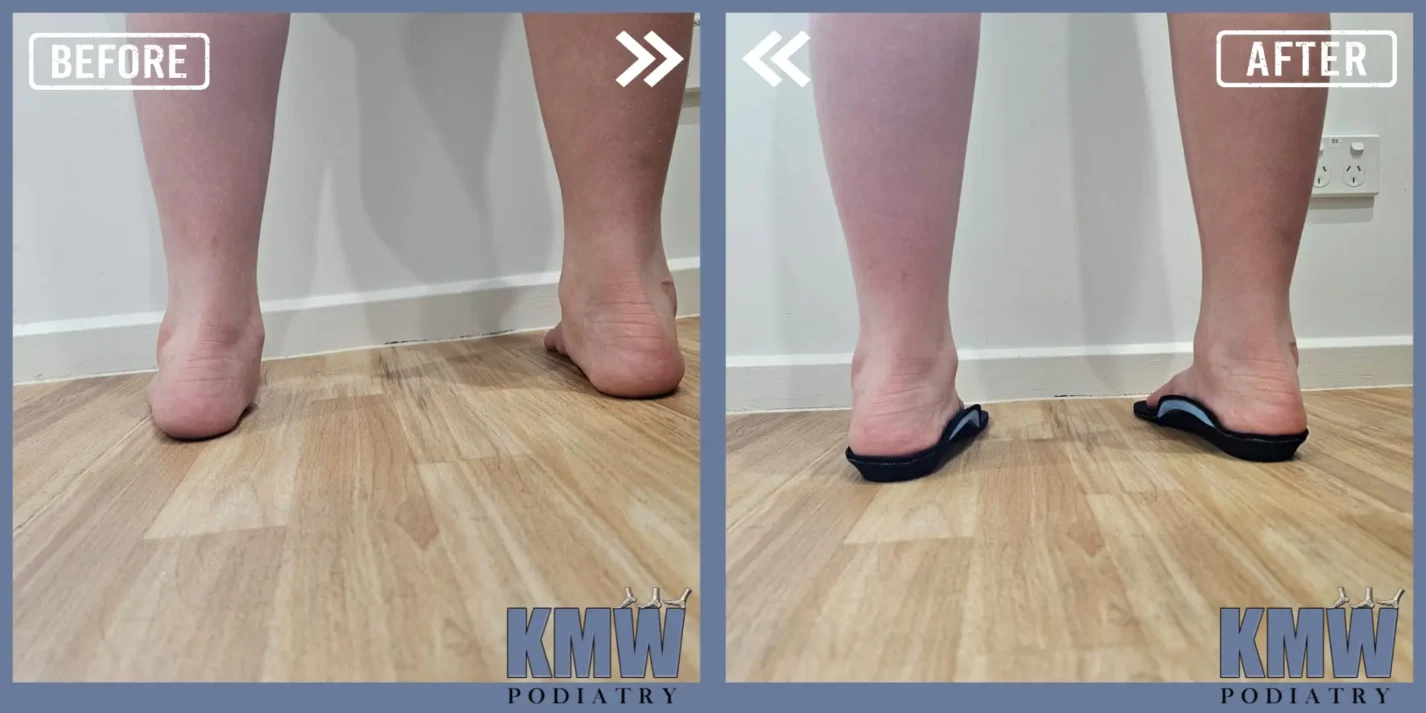
Standing on orthoses during individual assessments.
Clinical assessment example A: rear view of feet standing on orthoses.
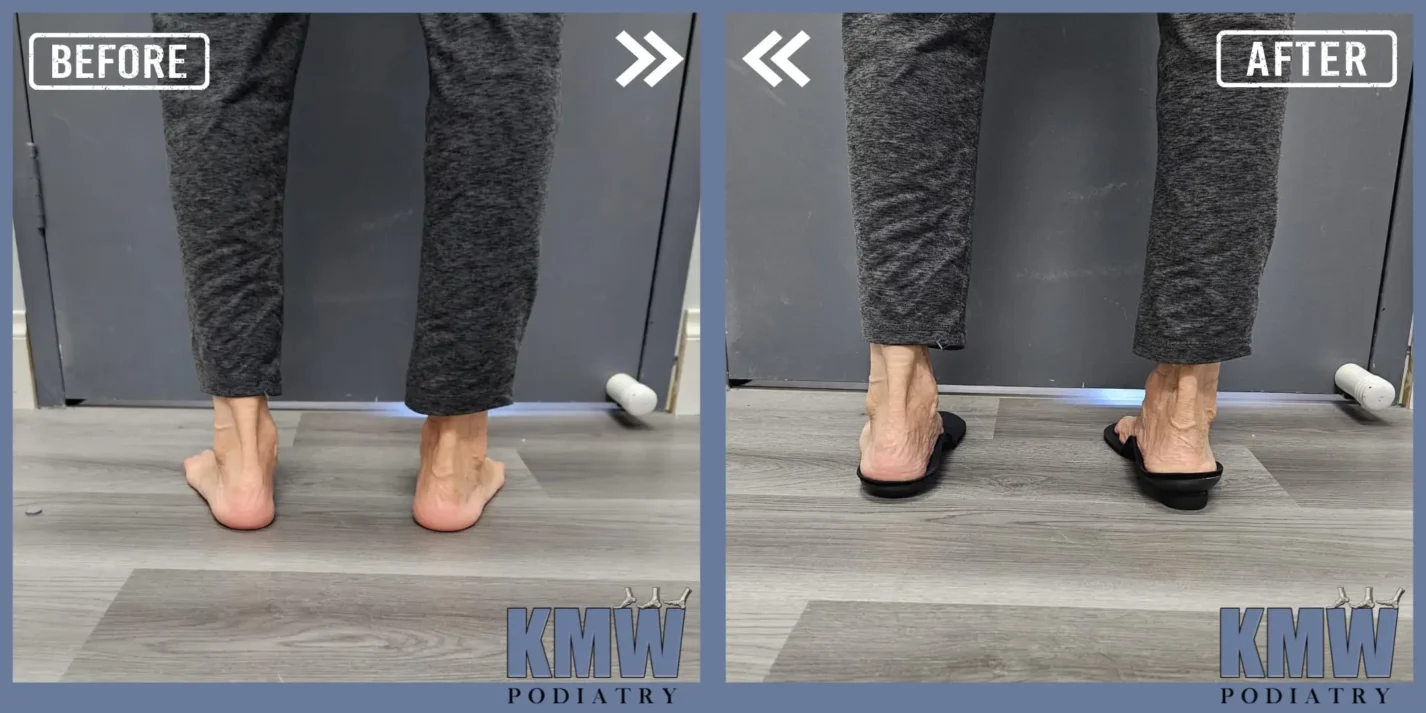
Standing on orthoses during assessment
Clinical assessment example B: rear view of feet standing on orthoses.
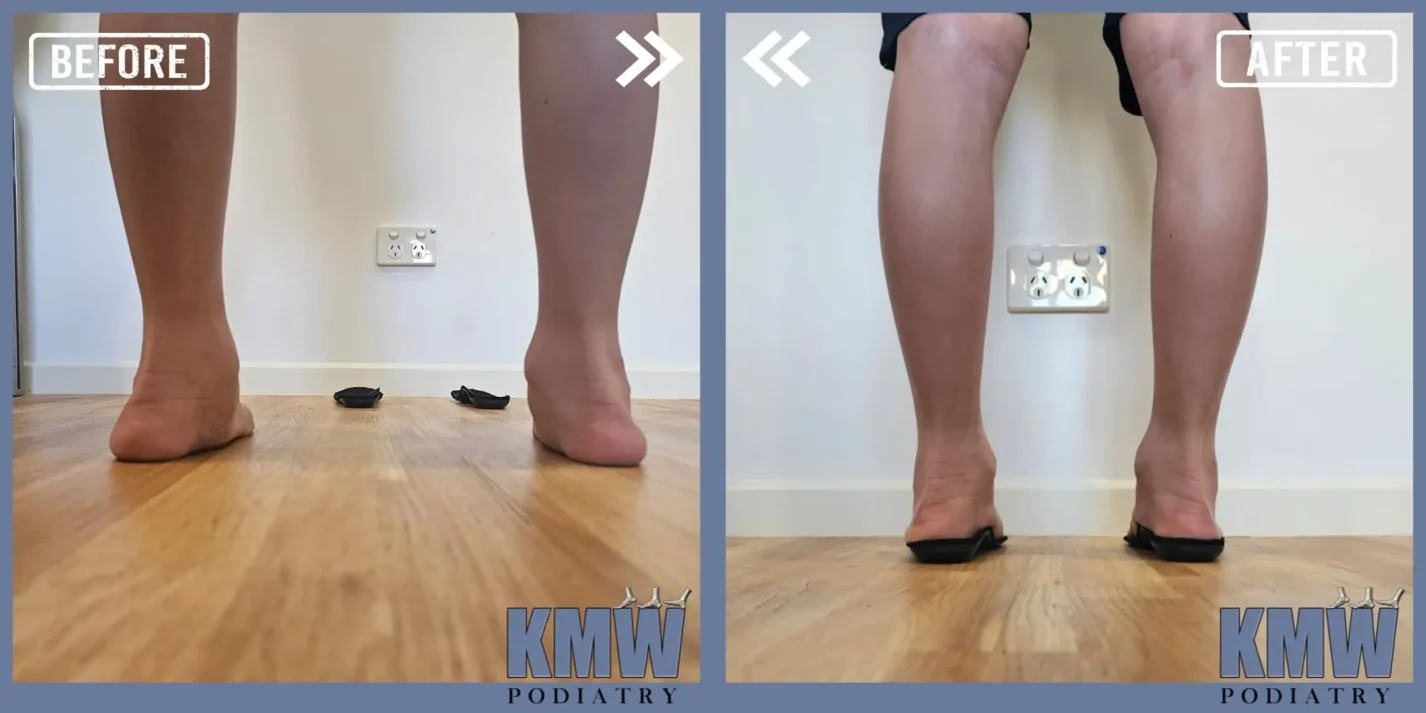
Standing on orthoses during assessment
Clinical assessment example C: rear view of feet standing on orthoses.
Standing on orthoses during assessment

Assessment examples only. These photos do not establish permanent correction, pain relief or improved function. Suitability and outcomes vary.

Photo note: Photos were cropped; clinical detail is unchanged.

Assessment & photo information

These photographs illustrate device use during assessment. They do not demonstrate permanent structural correction or establish pain relief or improved function.

Orthoses are considered following individual assessment. Suitability and outcomes vary, and other treatment options may be appropriate.

About these photographs: individual photographs have been selected and cropped to remove previous comparison labels and arrows. Clinical detail has not been retouched for this presentation. Shared with patient permission.

Learn about orthotics assessment and treatment options

We Love to See You Walk

Take the first step towards healthier feet today!

FAQ's for Footwear and Orthotics Education

Bring your usual work, everyday or sports shoes and any orthotics you already use. Tell your podiatrist which activities are uncomfortable and where shoes rub or feel tight.

No. The decision depends on symptoms and assessment. Footwear advice, exercise, ready-made inserts or other options may be considered. Discuss the expected benefit and cost of each suitable option.

Orthoses may help manage symptoms or redistribute pressure for selected conditions. They do not guarantee a permanent change in foot shape or a cure. Your podiatrist should explain the purpose of the recommended device.

No. Painless, flexible flat feet commonly do not require treatment. Assessment is appropriate when there is pain, stiffness, a marked difference between feet or difficulty walking or joining in activities.

Contact your podiatrist for advice if discomfort persists or the device causes rubbing or skin changes. Do not continue wearing it over a wound. People with reduced sensation should check their skin rather than relying on pain.

The footwear needed depends on the activity, fit and any workplace requirements. Bring both types to your assessment so you can discuss practical options and whether an orthosis will fit them.

Keep Me Walking Podiatry